By Mariam Guirgis
University of Stony Brook
Kevin Vaughan was an eighth grader in Merrick when his life was forever changed on September 11, 2001. The chaos that unfolded that day not only marked a national tragedy but also ignited Vaughan’s decision to join the Marine Corps.
“I remember vividly seeing these kids get called to the principal’s office during that time when no one knew what was going on,” Vaughan, 35, said. “It wasn’t until later that you found out why they were being called; they were saying goodbye to their parents and that was intense for someone that was in eighth grade.”
Vaughan spent his teenage years drifting but participated in his school sports—lacrosse, football, and wrestling. “I wasn’t really taking school seriously,” he said. “It was [either] sports [or] probably getting in trouble.”
His senior year, Vaughan realized college wasn’t for him, so he made the decision to enlist and hid his intentions from his parents until the last moment.
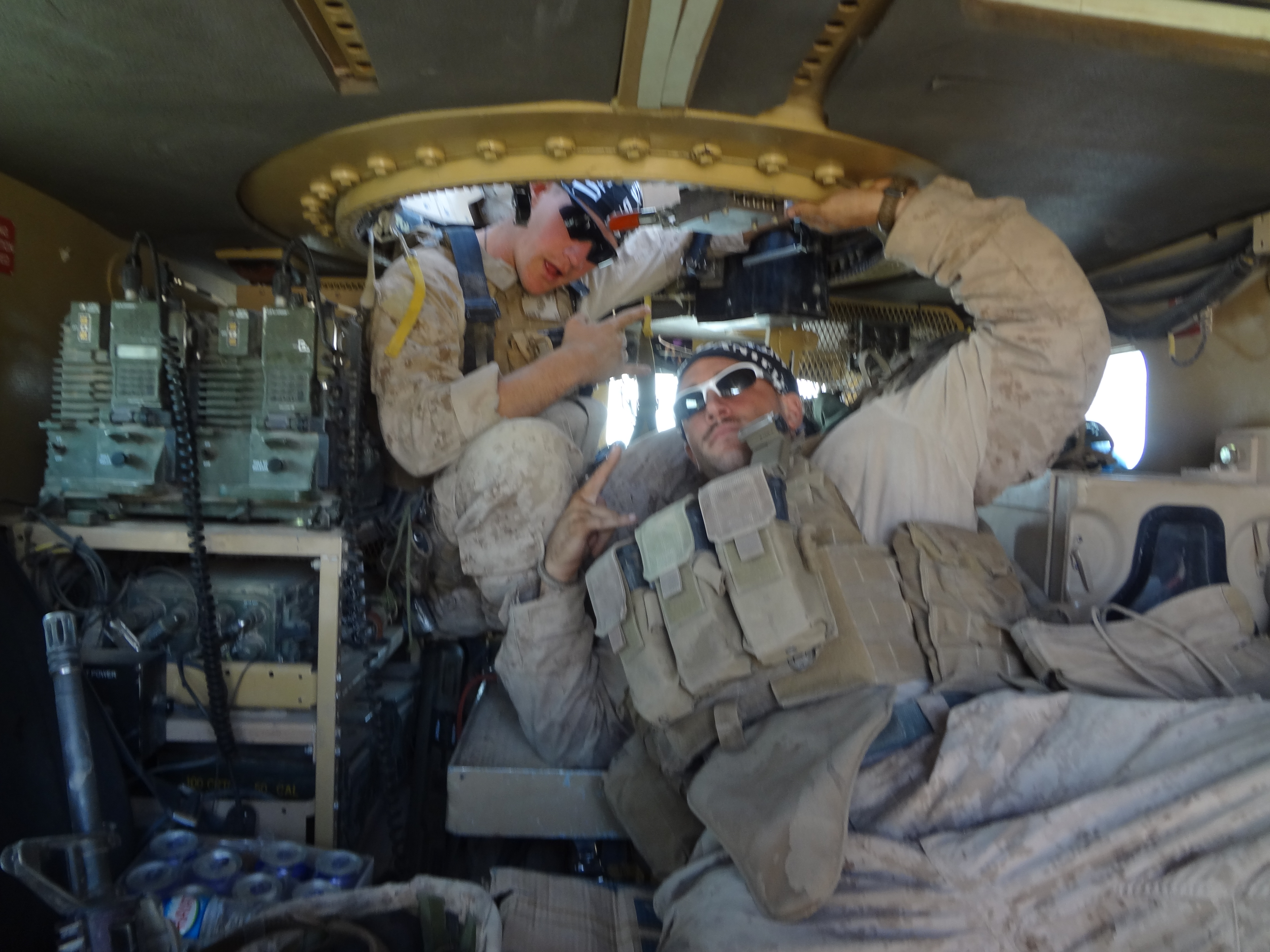
“I basically told the recruiter, ‘what’s the fastest way I can go to Iraq or Afghanistan? I want to fight,’” Vaughan said. After completing boot camp and infantry school, Vaughan was deployed to Afghanistan in early 2010.
During that first tour, a mortar malfunction led to serious injuries, bringing Vaughan back to the U.S. for recovery. “I hurt my shoulder and shattered my hand,” he recalled. Within months, Vaughan’s unit saw significant losses. “We lost 17 people, over 140 got Purple Hearts, a few got Silver Stars, and one guy got a Medal of Honor,” he said. A Medal of Honor is the highest award you can get in the military.
“One of our friends received a Medal of Honor because he jumped on a grenade that landed in between all of us and he survived. He saved six of us, and he survived,” he said.
Vaughan returned to Afghanistan to the same location for a second tour after seven
months, where the threat shifted from firefights to improvised explosive devices (IEDs).
On September 28, 2011, a month before his second tour was over, a 140-pound IED
detonated under Vaughan’s vehicle. “It basically destroyed my whole truck that I was in. I had third-degree burns, I broke both my legs, broke my hip, broke my arms, ribs, shattered my skull up here, broke my nose,” he recounted. “My friends had to basically fold my legs back forward in front of me because they were behind me and they had to put me on the stretcher. It took about 40 minutes for the helicopters to come in and pick us up.”
He was sent to Germany for surgeries before eventually being sent to Walter Reed
National Military Medical Center on his birthday, Oct. 1, where spent a year and a half there.
Vaughan left the hospital with 35 surgeries and has had 10 more surgeries since coming home.
The stay at Walter Reed marked a significant change in his life.
The aftermath of combat left Vaughan physically and emotionally scarred. “Being in a room that was only, like, an eight-by-eight room for a year and a half, it closes in on you after a while, especially when you can’t move because that’s how I lost my left leg below the knee. And after a year and a half of being there, I was discharged.”
Upon his discharge from the hospital, Vaughan returned to Merrick, his home, where the town welcomed him with a parade. “It was a mixture of ‘I’m thankful’ but at the same time I’m not ready to be around this many people,” he said. Vaughan was also gifted a new home made for wounded warriors by the non-profit organization, Building Homes for Heroes in 2015.
“The mental battle is so hard . . . there’ve been days where I definitely did not want to be here anymore, you know, and it’s scary and it’s dark if I didn’t have the friends and family that I had, I don’t know where I’d be,” he said.
Because of Vaughan’s experience with physical therapy when he was in recovery at
Walter Reed, he came home knowing he wanted to go into the field of PT, but hesitated. From 2013 to 2017, he started working with a union Local 52 where they hire wounded warriors to help build movie sets and TV shows.
However, it wasn’t long before Vaughan realized how demanding the job was on his body.
Vaughan used adventures like hiking mountains across the globe and traveling as a
distraction, but discovered those moments were often fleeting. “They always seem to fall a little short as far as, like, I always end up falling back into that little not-so-good circle of thoughts.”
Realizing this, Vaughan became determined to put his all into school and focus on
supporting others that may be facing similar struggles and got into the New York Institute of Technology’s physical therapy program.
“I signed up for [PT school] because I really wanted to help people. PT works, and I have a direct experience of why it works,” he said.
Through his recovery, Vaughan developed a unique perspective, allowing him to connect deeply with patients. “I can always show them a bigger picture: It’s bad now, but it can be way better than you think.”
Vaughan’s journey is a powerful reminder of resilience. “No matter how hard things get in life … or how emotional it is or how lost you feel you may not understand it in the moment and it might feel so unfair and unbearable but if you just push through. There’s always an answer at the end,” he said.
Mariam Guirgis is a reporter with The SBU Media Group, part of Stony Brook University’s School of Communication and Journalism’s Working Newsroom program for students and local media.